- Telephone number: +81-3-3962-0415
- FAX: Log in to display
- Website
- Basic Info
- Equipment
- Technology & Products
- Movie
- History, Philosophy & Quality
- EMIDASBLOG
- Map / HQ


What Is a Composite?|Basic Knowledge of CFRTP Composite Molding
Industry
---
Specifications
- Materials: ---
- Lots: ---
- Precision: ---
Conventional technologies/differences from other companies
A composite combines multiple materials to achieve properties unattainable by a single material. For example, reinforced concrete uses cement as the matrix and steel as reinforcement, providing high strength and durability.
CFRTP combines carbon fiber and thermoplastic resin, enabling lightweight structures with high stiffness. This section outlines its key features, molding methods, equipment capability, and applications.
【Difference Between CFRP and CFRTP】
Carbon fiber–reinforced composites are classified into CFRP (Carbon Fiber Reinforced Thermoset Plastic) and CFRTP (Carbon Fiber Reinforced Thermoplastic) based on the matrix material.
CFRP uses a thermosetting resin matrix, which permanently cures and cannot be softened or reprocessed after curing. In contrast, CFRTP employs a thermoplastic matrix, allowing the material to soften upon reheating, enabling reforming and recycling.
Due to this property, CFRTP is attracting attention as a material suitable for mass production and environmentally sustainable applications.
【CFRTP Molding Methods】
Typical CFRTP molding processes include hot press molding and cold press molding.
・Hot press: The mold is heated during forming. This method supports various intermediate materials and facilitates high surface quality.
・Cold press: The material is preheated in a separate process and formed in a cooled mold. It offers shorter cycle times and can handle deeper shapes.
Selecting the appropriate method according to appearance requirements, geometry, and takt time is important.
【Supported Materials and Intermediate Materials】
Supported resins include PP, PA6, PEEK, and bio-based resins such as PLA and PA11. Intermediate materials—prepreg, nonwoven fabric, chopped fiber, and UD tape—enable optimized selection based on application and cost, supporting designs that balance rigidity, appearance, and cost.
【Equipment and Prototyping】
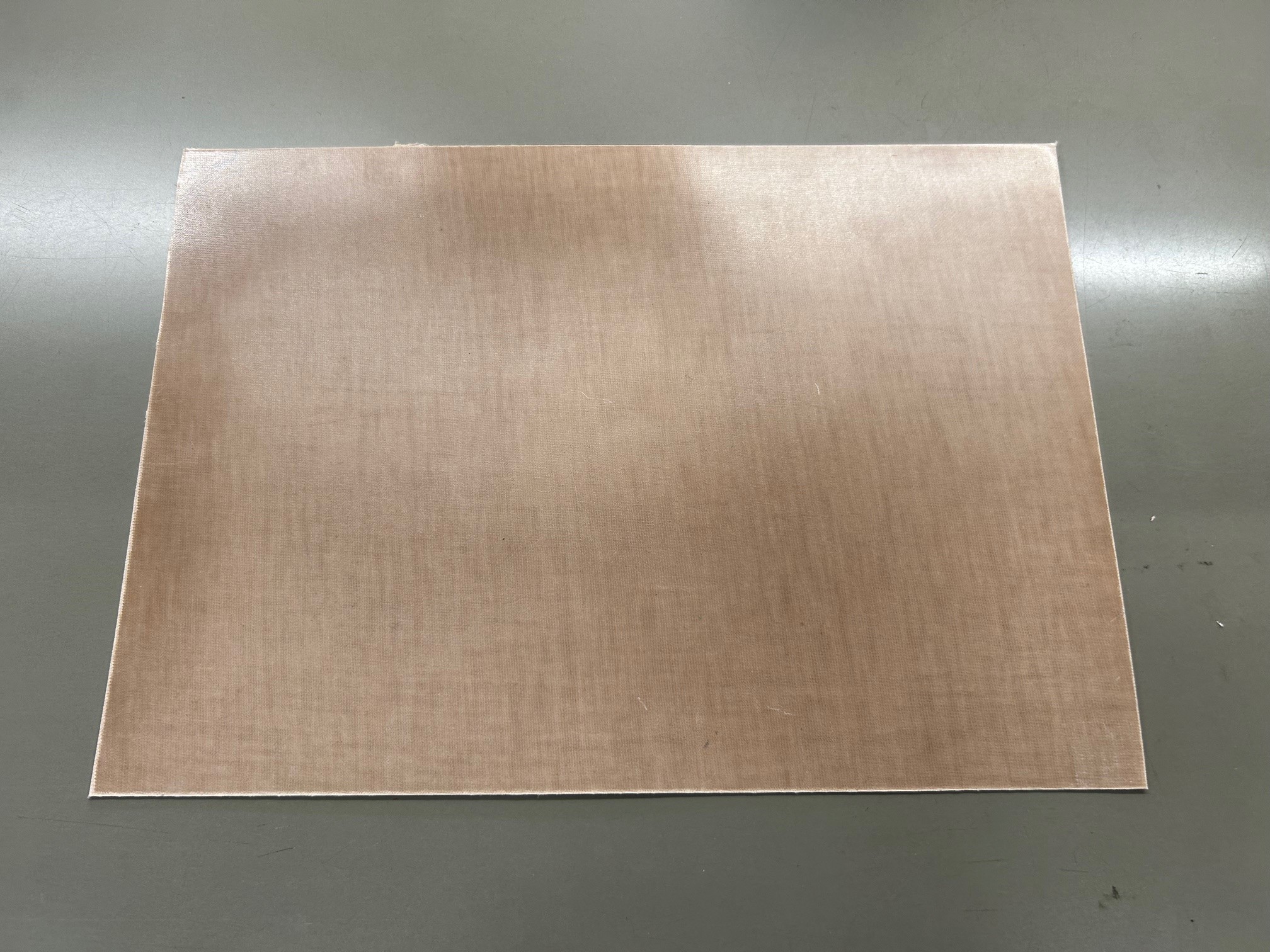
A 200-ton press supports molding up to ~400 °C, with molds up to 1200 × 1500 mm and products up to ~500 × 500 mm. Prototyping uses an A4 flat mold to verify conditions for 0.5–5.0 mm thickness. Secondary machining is handled through partner companies.
【Application Examples】
CFRTP enables both lightweight performance and high structural stiffness, supporting applications such as:
・Drone propellers: Achieving thin-wall lightweight structures while maintaining stiffness
・Bicycle components: Realizing lightweight yet durable structures
・Leisure equipment parts: Meeting both aesthetic and weight reduction requirements
These examples demonstrate how CFRTP is expected to serve as an alternative to conventional metals and CFRP.
【Development Process】
Development begins with flat plate molding to validate process parameters, followed by simple-shape trials to assess features such as ribs and draft. Final prototype molding of the actual geometry establishes optimized conditions. Secondary processing and assembly are verified with partner companies, reducing mass production risks.
【Summary】
Composites combine multiple materials to achieve enhanced performance beyond single materials. CFRTP offers lightweight, high stiffness, good moldability, and recyclability, making it suitable for advanced applications. Kawamura Kikai supports material selection, prototyping, and mass production, with partner-based secondary processing, enabling efficient development from early design stages.
【Contact Information】
Kawamura Kikai Co., Ltd.
Head Office: 2-4 Shimizu-cho, Itabashi-ku, Tokyo 【Composite Division】
Hanazono Factory: 10 Kitane, Fukaya-shi, Saitama 【Metal Press Division】
Website: https://www.kawamura-kikai.co.jp
Inquiry / Quotation: https://www.kawamura-kikai.co.jp/contact/
Please mention that you saw us on “Emidas” when making your inquiry.


Company info
| Company name | Kawamura Kikai Co., Ltd. | EMIDAS Member Number | 105383 |
|---|---|---|---|
| Country | Japan | Street address |
Itabashi-ku Tokyo Japan |
| Telephone number | +81-3-3962-0415 | Fax number | Log in to display |
| Employees | 64,000,000 JPY | Annual sales | |
| Employees | 50 | Person in charge | 河村 護 |
| Type of manufacturing | Industrial machinery / Transportation equipment | ||
| Primary clients |
|
||