- Telephone number: +81-3-3962-0415
- FAX: Log in to display
- Website
- Basic Info
- Equipment
- Technology & Products
- Movie
- History, Philosophy & Quality
- EMIDASBLOG
- Map / HQ


CFRTP Molding with Bio-Based Resins|A New Environmentally Responsible Option
Industry
---
Specifications
- Materials: ---
- Lots: ---
- Precision: ---
Conventional technologies/differences from other companies
As industries shift toward environmentally conscious manufacturing, combining CFRTP (Carbon Fiber Reinforced Thermoplastics) with bio-based resins offers a new pathway for sustainable product development.
Kawamura Kikai Co., Ltd. is advancing CFRTP molding using plant-derived resins such as PLA, PA11, and hemicellulose—achieving both environmental responsibility and functional performance. Below is an overview of the materials and production capabilities.
【Types and Characteristics of Bio-Based Resins】
PLA (Polylactic Acid)
A bioplastic derived from corn and other biomass sources. It offers good moldability and is suitable for environmentally conscious applications.
PA11 (Polyamide 11)
A resin derived from castor oil. It provides durability and flexibility, making it applicable for industrial components.
Hemicellulose
A polysaccharide component of plant cell walls that works alongside cellulose to support plant structure. It is attracting attention for broader material applications.
By incorporating these bio-based resins into CFRTP, manufacturers can contribute to carbon neutrality compared to conventional petroleum-based resin systems.
【Equipment and Molding Capabilities】
Maximum press capacity: 200 tons
Maximum molding temperature: Approx. 400°C
Maximum mold size: 1200 × 1500 mm
Typical product size guideline: Up to 500 × 500 mm
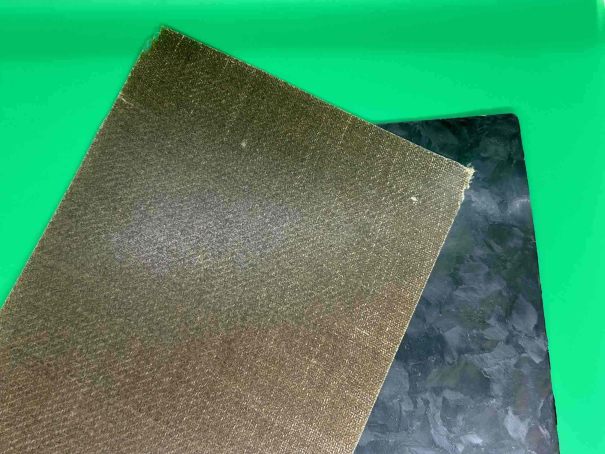
Prototype evaluations are conducted using flat plate molds (approximately A4 size) to compare material characteristics and assess performance differences among bio-based resins.
【Environmental Initiatives】
Beyond simply using plant-derived resins, efforts include:
Crushing and reusing used materials
Re-forming scrap and offcuts
These initiatives help reduce waste and promote circular manufacturing. Environmental considerations are incorporated from the product development stage.
【Evaluation and Inspection System】
After molding, dimensional accuracy can be verified using:
3D coordinate measuring machines
Image-based dimensional measurement systems
By comparing molding conditions and cooling profiles for each resin type, optimal processing parameters are established to stabilize quality.
Secondary processing is not handled in-house; however, through collaboration with partner companies, machining and assembly can be supported.
【Summary】
Combining bio-based resins with CFRTP enables both environmental responsibility and high performance in a single solution.
From prototyping and evaluation to coordinated secondary processing, Kawamura Kikai Co., Ltd. supports environmentally conscious product development.
For designers aiming to achieve sustainable and high-performance product solutions, this approach represents a powerful new option.
【Contact Information】
Kawamura Kikai Co., Ltd.
Head Office: 2-4 Shimizu-cho, Itabashi-ku, Tokyo 【Composite Division】
Hanazono Factory: 10 Kitane, Fukaya-shi, Saitama 【Metal Press Division】
Website: https://www.kawamura-kikai.co.jp
Inquiry / Quotation: https://www.kawamura-kikai.co.jp/contact/
Please mention that you saw us on “Emidas” when making your inquiry.


Company info
| Company name | Kawamura Kikai Co., Ltd. | EMIDAS Member Number | 105383 |
|---|---|---|---|
| Country | Japan | Street address |
Itabashi-ku Tokyo Japan |
| Telephone number | +81-3-3962-0415 | Fax number | Log in to display |
| Employees | 64,000,000 JPY | Annual sales | |
| Employees | 50 | Person in charge | 河村 護 |
| Type of manufacturing | Industrial machinery / Transportation equipment | ||
| Primary clients |
|
||