- Telephone number: +81-3-3962-0415
- FAX: Log in to display
- Website
- Basic Info
- Equipment
- Technology & Products
- Movie
- History, Philosophy & Quality
- EMIDASBLOG
- Map / HQ


Material Overflow or Unstable Shapes? A Preforming Die Can Solve the Problem
Industry
Automobile (trial production)
Automobile (mass production)
Light electrical/Home electrical appliance
Specifications
- Materials:Thermosetting resin
Glass fiber resin
Carbon fiber resin - Lots:1 - 100 lots
- Precision: ---
Conventional technologies/differences from other companies
In composite molding, multiple layers such as prepregs or preforms are often stacked together. Depending on the material volume and thickness, materials may overflow or protrude from the mold. As a result, pressure distribution becomes uneven, and the intended shape may not be achieved.
An effective solution to these issues is the use of a preforming die in the molding process.
【What Is a Preforming Die?】
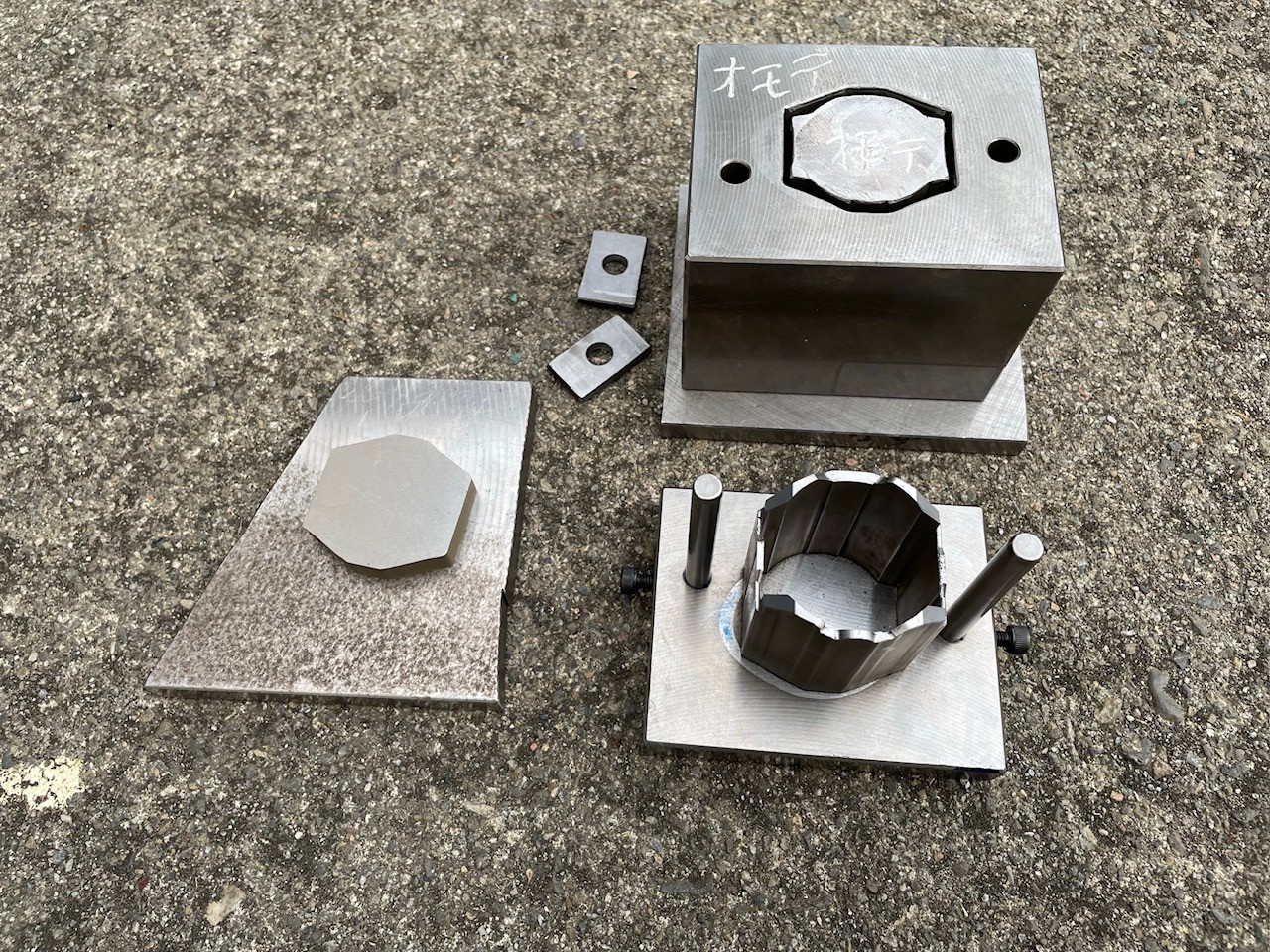
A preforming die is an intermediate mold used to compress and roughly shape materials before final molding.
When stacked materials cannot properly fit into the final mold in one step, they are first compressed in a preforming die to create an intermediate product (a preform shape). This intermediate product is then placed into the final mold for pressing.
By stabilizing material flow in advance, the final product achieves:
Improved shape accuracy
More uniform pressure distribution
Cleaner surface finishes
【Advantages of Using a Preforming Die】
Although it may seem like adding an extra step, introducing a preforming die offers significant benefits:
Reduced material loss
Prevention of uneven material distribution or overflow
Improved yield rate
More stable product quality
Optimized laminate structure
Enhanced strength and dimensional accuracy
In many cases, even with an additional process, overall production efficiency and cost performance improve.
【Application to Chopped Fiber Molding】
Preforming dies are also effective when molding chopped fiber materials.
Chopped fiber materials consist of short fibers randomly mixed together and are suitable for complex shapes and small components. However, directly loading chopped fibers into the final mold can lead to:
Fiber distribution unevenness
Complicated and time-consuming manual work
Instead, chopped fibers can first be compressed and shaped into a billet (intermediate product) using a preforming die. The billet is then placed into the final mold for molding.
Compared to manually placing chopped material into fine areas with tools such as tweezers, using intermediate billets offers:
Faster processing
Higher repeatability
Improved product uniformity
Especially in mass production, combining billet preforming with final molding helps establish a stable production cycle and significantly enhances productivity.
【Cost Benefits】
Manufacturing a preforming die or billet mold requires initial investment in time and cost. However, over the long term, the reduction in material waste and process inefficiencies often results in greater cost savings.
This is particularly valuable when working with expensive composite materials. Minimizing waste has substantial economic benefits. In addition, improved product consistency reduces inspection and rework costs.
Overall, this approach enables:
Lower total production costs
Higher product quality
Greater process stability
【Summary】
Introducing a preforming die is not merely an additional process step—it is a strategic improvement that enhances molding quality, material yield, and productivity.
It is especially effective for:
Complex-shaped components
Chopped fiber molding
Applications where material flow and filling are challenging
Although it involves initial setup costs, it is increasingly recognized as a technology that balances long-term cost efficiency with high-quality manufacturing.
For operations seeking greater molding stability and improved quality, incorporating a preforming die into the process design is a highly effective option.
【Contact Information】
Kawamura Kikai Co., Ltd.
Head Office: 2-4 Shimizu-cho, Itabashi-ku, Tokyo 【Composite Division】
Hanazono Factory: 10 Kitane, Fukaya-shi, Saitama 【Metal Press Division】
Website: https://www.kawamura-kikai.co.jp
Inquiry / Quotation: https://www.kawamura-kikai.co.jp/contact/
Please mention that you saw us on “Emidas” when making your inquiry.


Company info
| Company name | Kawamura Kikai Co., Ltd. | EMIDAS Member Number | 105383 |
|---|---|---|---|
| Country | Japan | Street address |
Itabashi-ku Tokyo Japan |
| Telephone number | +81-3-3962-0415 | Fax number | Log in to display |
| Employees | 64,000,000 JPY | Annual sales | |
| Employees | 50 | Person in charge | 河村 護 |
| Type of manufacturing | Industrial machinery / Transportation equipment | ||
| Primary clients |
|
||